Ore Factory Squad Factory Size Upgrade & Four Storage Outputs
Decide whether the new factory-size upgrade solves a real space or output-access bottleneck, then give its four Storage Outputs traceable roles.
Quick answer
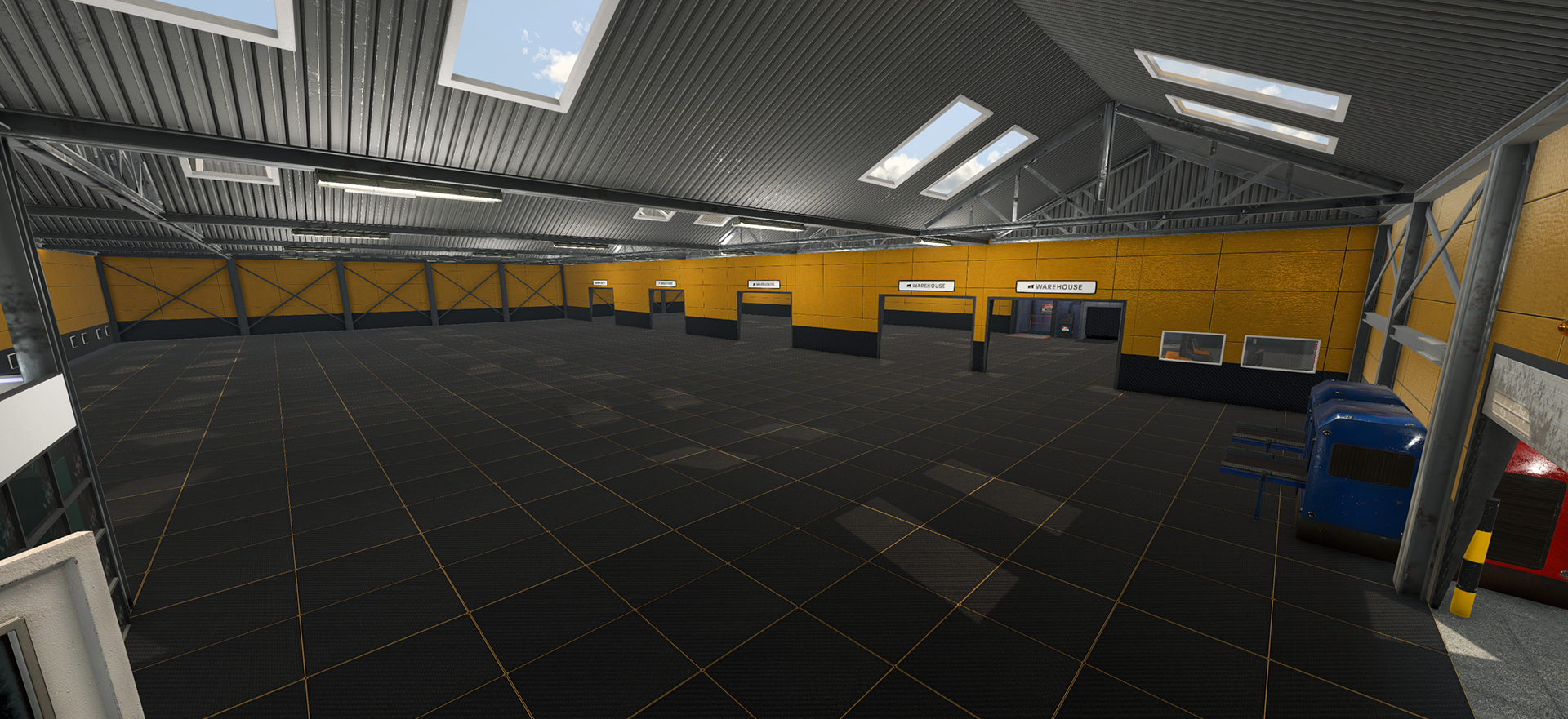
Wait on the new factory-size upgrade unless a working production line is genuinely blocked by floor space or Storage Output access. The v1.1.0 upgrade adds more building space and four new Storage Output sockets, but it cannot repair a disconnected belt, wrong recipe, empty source, or failed oil handoff.
When expansion is justified, reserve one planned downstream job for each new socket, then connect and observe one route at a time using whatever controls the current game exposes. The four-socket plan below is an OreFactoryGuide planning method, not an official layout, control specification, or throughput claim.
Buy or wait
| What you observe | Decision | Why |
|---|---|---|
| A proven line has no practical place for its next required machine | Consider the factory-size upgrade | additional building space addresses the visible limit |
| Working lines have exhausted the Storage Output sockets you can currently reach | Consider the upgrade | the release confirms four new output sockets |
| A machine receives no input or a belt does not connect | Wait and repair the handoff | more space does not prove the route works |
| The new oil chain has not completed one Tanker-to-Tank-to-Refinery test | Wait | expansion would hide the first failed stage |
| The current factory still has unused accessible space and outputs | Wait | no confirmed expansion bottleneck exists yet |
For a purchase comparison based on the first current blocker, use the upgrade and license guide.
Plan four traceable output routes
Use these as notes for four possible downstream routes, not as claims about built-in socket labels or material assignment controls:
- Proven core feed: one material already used by a stable production line.
- Second recurring feed: another material with a clear machine destination.
- New-system test: the material for the one new branch you are currently proving.
- Spare diagnostic output: keep one route uncommitted until the other three work.
Connect and observe one route before building the next. If a route is intended to feed several machines, confirm the first destination before adding a Splitter or longer belt. The conveyor bottleneck guide covers that downstream diagnosis.
This planning scheme does not claim the sockets have separate controls, different speeds, material filters, or official roles. It simply keeps each proposed route easy to trace and revise.
Protect the expansion from repeating the old problem
Before moving machines, label the current source, destination, and purpose of every working line. Preserve a clear inspection path around storage and major handoffs. Move one production family, verify it, and only then move the next.
The modular factory layout guide gives a general zone plan. If the expansion is specifically for Masters of Oil, use the oil factory layout guide to separate Tanker arrival, storage, first processing, later processing, and product handoff.
What is still unknown
The official announcement does not publish the upgrade's price, exact unlock level, building dimensions, socket throughput, or one optimal use for the four outputs. It also does not guarantee that every save needs the expansion.
Use the current in-game requirement for purchase and placement. If your only evidence is that the factory feels crowded, first remove abandoned routes and prove the active loop. If space or output access remains the first visible constraint, the expansion is then addressing the right problem.
For the wider post-Level-5 decision, return to the Level 6–12 progression guide. For oil product destinations, use the oil products reference.
Sources
The official v1.1.0 Masters of Oil announcement states that the new factory-size upgrade adds more building space and four new Storage Output sockets. The Steam discussion describing space pressure while automating oil products is used only as a demand signal; it does not establish factory dimensions, required capacity, or a universal layout.